
English 
Views: 0 Author: Site Editor Publish Time: 2026-10-14 Origin: Site


Picture a grueling mid-July afternoon. You are pushing a commercial mower through thick, damp grass. The motor screams under a blazing sun. Mechanical friction peaks. Inside that tightly enclosed cutting deck, temperatures skyrocket. This raises a critical engineering question: what keeps the motor running efficiently without burning out under such extreme thermal stress?
Electric and gas-powered landscaping tools generate massive amounts of internal heat during continuous operation. If the internal stator or rotor components lose their magnetic charge—a destructive process known as thermal demagnetization—the motor experiences a severe drop in torque. Electrical draw spikes. Ultimate failure follows shortly after. Standard materials simply cannot survive this environment.
This is where specialized ceramics emerge as the unsung heroes of the outdoor power tool industry. Engineered precisely for high-stress and high-heat environments, a premium Garden Equipment Magnet serves as the backbone of modern landscaping machinery. In this comprehensive technical guide, we will break down why this specific compound is the ultimate choice for motor applications. We will analyze its incredible thermal stability, long-term commercial value, and how it stacks up against competing materials in the heavy-duty equipment sector.
Exceptional Thermal Stability: These specialized components comfortably withstand continuous operating temperatures up to 250 degrees Celsius without suffering permanent magnetic flux loss. They are highly reliable for sealed motor housings.
High Coercivity at Elevated Temperatures: Unlike most magnetic materials that weaken as they heat up, this unique compound exhibits a rare characteristic. Its resistance to demagnetization actually increases at higher temperatures.
Corrosion-Proof Nature: Composed entirely of oxidized iron, these ceramics are naturally resistant to rust. Chemical stability is vital for outdoor applications exposed to wet grass, morning dew, and damp storage sheds.
Cost-Effective Manufacturing: By utilizing abundant raw materials, manufacturers achieve an optimal balance of reliable performance and low production cost. This avoids the severe price volatility associated with rare-earth alternatives.
Eco-Friendly and Safe: Backed by rigorous material safety standards like RoHS and REACH, they are non-toxic and perfectly safe for mass integration into consumer tools.
Before diving into the material science, we must look at the macro trends reshaping outdoor power equipment. The landscaping industry is undergoing a massive wave of electrification. Driven by strict emissions regulations and noise ordinances, manufacturers are rapidly phasing out traditional gas engines in favor of high-voltage battery systems.
Consequently, modern cordless mowers rely on powerful digital brushless DC motors. These digital motors run leaner, faster, and significantly hotter than older brushed designs. Engineers are constantly pushing for higher RPMs to slice through wet vegetation while trying to extend battery life. This industry-wide pivot has made thermal management the absolute bottleneck in motor design. If the magnetic components inside these new digital motors cannot handle the sustained heat spikes, the entire electric transition fails. Reliable thermal stability is no longer just a feature—it is a mandatory baseline.
Designing motors for outdoor power equipment requires engineers to account for severe environmental variables. The thermal dynamics inside a cutting deck present one of the toughest hurdles in electrical engineering.
Lawn mowers operate under some of the most grueling conditions of any consumer appliance. Slicing through thick vegetation demands high revolutions per minute and sustained torque. This relentless mechanical exertion generates immense friction within the motor assembly. To make matters worse, these machines are typically utilized during the peak of summer. Ambient temperatures are already elevated before the blades even begin to spin.
To protect internal components from flying grass clippings, dust, and moisture, motors are housed in tightly enclosed casings. While this shields the stator and rotor from physical debris, it severely restricts airflow. The combination of electrical resistance in the copper windings, mechanical friction from bearings, and poor ventilation creates a localized thermal oven. Internal temperatures can rapidly escalate well beyond 100 degrees Celsius.
Permanent magnets act as the heart of a direct current motor. They interact with the electromagnetic field of the coils to create rotational force. However, all magnetic materials are sensitive to thermal fluctuations. When a standard component is exposed to high heat, the thermal energy causes its internal atomic domains to become agitated and misaligned.
This misalignment leads to a sudden drop in magnetic flux. If the temperature exceeds the material's maximum operating threshold, thermal demagnetization occurs. In the field, this translates to sluggish blade rotation, decreased battery efficiency, and a severe loss of cutting torque. If the heat surpasses the Curie temperature, the material becomes completely and permanently demagnetized. Standard materials fail in these environments, demanding a more robust engineering solution.
To understand why certain motors survive heavy-duty use while others burn out, we must dive into the material science behind the components driving them.
Chemically represented as SrFe12O19, Strontium Ferrite is a type of hard ceramic compound. It is manufactured by combining iron oxide with strontium carbonate. The resulting material features a highly stable hexagonal magnetoplumbite crystalline structure. This specific atomic arrangement effectively locks the magnetic domains into place. Once charged, it is exceedingly difficult to alter the material's magnetic polarity.
Because it is a ceramic material, it is electrically insulating and highly resistant to chemical degradation. It falls under the category of hard magnetics. This means it retains its permanent magnetism exceptionally well, unlike soft variants used in transformers to channel magnetic fields temporarily.
Historically, barium ferrite was widely used in similar industrial applications. Both materials share a similar hexagonal crystal structure and offer excellent magnetic stability. However, the modern motor industry has largely shifted away from barium for two primary reasons.
First, strontium compounds generally exhibit superior magnetic properties. They yield higher coercivity and remanence. This allows engineers to design slightly more powerful motors without increasing the physical footprint. Second, barium carries higher toxicity risks during the milling and calcination phases. Strontium is significantly safer to handle during production and poses fewer environmental risks upon disposal.
The short answer is absolutely. The empirical data surrounding this ceramic's thermal properties clearly demonstrates its capability to handle the extreme conditions of outdoor power tools.
When evaluating a component for high-temperature applications, engineers scrutinize two critical metrics. These are the maximum continuous operating temperature and the Curie temperature.
This ceramic boasts a Curie temperature of approximately 450 degrees Celsius. This is the absolute thermal limit where the material loses all permanent magnetism. More importantly for practical applications, its maximum safe continuous operating temperature is rated up to 250 degrees Celsius. Even the hardest-working commercial mowers rarely generate internal casing temperatures exceeding 150 degrees Celsius. Therefore, the 250-degree threshold provides a massive safety margin. It ensures the motor will not suffer from permanent magnetic degradation on a blistering August afternoon.
Beyond mere survival, one of the most fascinating scientific traits of this specific material is its behavior under thermal stress. For the vast majority of magnetic materials, both magnetic output and Heat Resistance decrease as temperatures rise.
This compound behaves entirely differently. While its remanence drops slightly as it heats up, its intrinsic coercivity actually increases with temperature. It possesses a positive temperature coefficient of coercivity. Practically speaking, as the lawn mower motor gets hotter, the magnet actually becomes harder to demagnetize. This unique physical property prevents the opposing electromagnetic fields generated by the motor's coils from stripping the permanent magnet of its strength.
Thermal stability is just one piece of the puzzle. Several other physical and commercial factors make this material the undisputed industry standard for outdoor power equipment.
Landscaping tools are not gentle machines. They endure intense mechanical vibrations, sudden impacts from hidden rocks, and constant rotational stress. Because it is a sintered ceramic, the material is highly rigid and resistant to physical compression. When properly secured and glued within a steel motor housing, the hard nature of the compound easily withstands the baseline mechanical vibrations of a heavy-duty mower without warping.
Moisture is the ultimate enemy of outdoor machinery. Mowers are routinely exposed to wet grass, washed down with garden hoses, and left in high-humidity storage sheds over long winters. Many high-strength metals contain pure iron. Unprotected iron oxidizes rapidly when exposed to moisture, leading to rust, flaking, and eventual stator failure.
Because this material is synthesized from iron oxide, the iron is already fully oxidized. Chemically, it cannot rust any further. This inherent corrosion-proof characteristic completely eliminates the need for expensive protective metallic platings or epoxy coatings. The component remains pristine even if condensation penetrates the motor casing.
For procurement managers and equipment manufacturers, component cost is a critical factor in keeping consumer retail prices competitive. The raw materials required are abundant and inexpensive to mine and process globally.
Sourcing these materials allows manufacturers to produce high-torque direct current motors at a fraction of the cost of rare-earth alternatives. This cost-efficiency, combined with long-term durability, is a primary reason why ceramics remain the dominant magnetic material by volume in the global motor industry.
To make an informed engineering decision, we must compare this ceramic compound against its main competitor in the modern motor market. The table below highlights why a Ferrite Magnet outperforms Neodymium in heavy-duty outdoor applications.
Feature | Strontium Ferrite | Neodymium NdFeB |
|---|---|---|
Max Operating Temp | Up to 250°C | 80°C - 120°C standard grades |
Corrosion Resistance | Excellent. Inherently rust-proof | Poor. Requires multi-layer plating |
Coercivity under Heat | Increases as temperature rises | Drops significantly under heat |
Cost Profile | Highly cost-effective | Expensive subject to market volatility |
Best Application | Heavy-duty outdoor power tools | Small lightweight consumer electronics |
While Neodymium is unparalleled for small drones or cordless handheld drills where weight is the absolute priority, the rugged demands of a lawn mower require a different approach. The superior thermal stability and natural immunity to rust make ceramics the undisputed champion for large outdoor power tools. The slight trade-off in overall motor weight is easily justified by massive gains in reliability and cost savings.
For procurement managers and motor engineers, selecting the right component requires moving beyond abstract concepts. You must evaluate specific technical parameters and find a capable manufacturing partner.
When ordering components for a hot motor environment, do not rely solely on physical dimensions. You must verify the magnetic grade by reviewing the technical data sheets. For high-performance digital mower motors, look for these specific ranges:
Remanence Br: Aim for 380 to 430 mT. This indicates the overall magnetic strength and dictates your expected torque output.
Intrinsic Coercivity Hcj: Look for values between 275 and 320 kA/m. This is the most critical metric for motors. It indicates the material's resistance to demagnetization from the motor's electrical fields and heat.
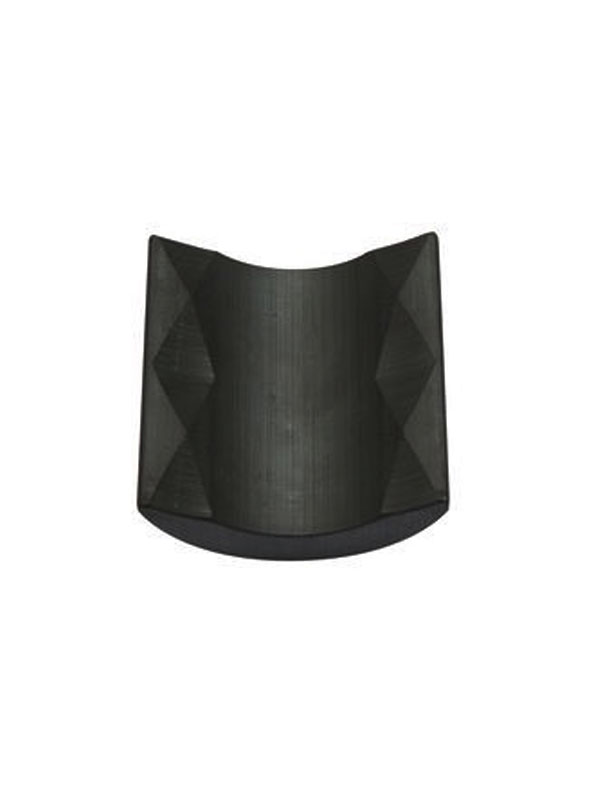
Shape and Tolerances: Off-the-shelf blocks are useless for efficient motors. Specify arc segment shapes perfectly engineered to match the curvature of your rotor. This reduces the air gap and maximizes efficiency.
Working with an experienced manufacturer ensures that the arc, thickness, and magnetic orientation are optimized for your specific motor design. When sourcing a reliable Lawn Mower Motor Magnet, verify that the supplier conducts rigorous high-temperature testing and provides detailed demagnetization curves.
Consulting with a magnetics expert during the prototyping phase saves significant time and money. It guarantees your garden equipment remains durable, powerful, and heat-resistant for years of commercial use.
The engineering evidence is clear. Strontium ferrite can absolutely handle the grueling heat of a lawn mower motor. By offering an incredible operating threshold of 250 degrees Celsius and a unique ability to increase its resistance to demagnetization as it heats up, it solves the most pressing thermal challenges in outdoor power equipment.
Beyond heat resistance, its natural immunity to rust and highly affordable manufacturing costs make it the ultimate trifecta for engineers and procurement teams. As the landscaping industry continues its massive shift toward high-powered electric tools, upgrading to high-grade ceramic magnetics ensures that consumer garden equipment remains reliable and ready to tackle the toughest summer lawns.
If you are designing the next generation of outdoor power tools and need components that will not fail under pressure, it is time to upgrade your sourcing strategy. Visit Anhui GC Magnet to explore customized, high-temperature magnetic solutions engineered specifically for the landscaping industry.
They can typically operate efficiently up to 250 degrees Celsius and have a Curie temperature of around 450 degrees Celsius. This massive thermal threshold makes their heat resistance perfect for heavy-duty enclosed motors.
No. Because they are manufactured from iron oxide, they are already fully oxidized. They are naturally completely resistant to rust and corrosion, even when exposed to wet grass conditions or stored in damp sheds.
While neodymium is significantly stronger, it is much more expensive, highly prone to rust, and loses its magnetism at much lower temperatures. Ceramics provide the safer, more durable, and cost-effective choice for hot outdoor environments.
Interestingly, yes. While the overall magnetic strength decreases slightly as it gets hotter, its intrinsic coercivity actually increases with heat. This unique trait makes it highly stable against demagnetization in hot motors.
Yes. They are non-toxic, chemically stable, and widely approved by major environmental agencies. They comply with strict regulations like RoHS and REACH, making them a safe choice for residential garden tools.
Symptoms include a noticeable loss of cutting torque, sluggish blade speed when the machine gets hot, and significantly reduced battery run times. The motor will draw more current to compensate for the weak magnetic field, causing it to overheat further.
Absolutely. Arc segments are engineered to match the exact curvature of the motor's rotor. This minimizes the air gap between the magnet and the copper coils, which drastically improves magnetic flux efficiency and overall motor torque.
