
English 
Views: 0 Author: Site Editor Publish Time: 2026-10-20 Origin: Site


Modern consumers demand home appliances that are exceptionally quiet, highly energy-efficient, and built to last for decades. Buyers usually focus on digital features and drum capacities when purchasing a new laundry appliance. The true secret to a reliable washing machine actually lies hidden deep inside its motor. The driving force behind these advanced systems relies heavily on the quality of the magnetic materials used in their construction.
Enter strontium ferrite. This highly specialized component is the unsung hero of the modern appliance manufacturing industry. This unique material fundamentally revolutionized how washing machine motors operate. Washing machine motors face incredibly harsh environmental conditions daily. Rapid temperature fluctuations, high heat generation, constant mechanical vibration, and persistent moisture are standard operating parameters. Choosing the appropriate magnetic material solves these complex engineering challenges. Furthermore, it keeps mass-manufacturing costs strictly under control.
In this comprehensive engineering guide, we will explore the unique physical and chemical properties of this ceramic magnet. We will analyze how it compares to alternative materials and why a specific curved shape is crucial for rotational efficiency. Ultimately, you will learn exactly how it directly improves the overall performance and lifespan of washer motors.
Cost-Efficiency: Strontium ferrite offers an unbeatable balance of reliable performance and long-term affordability. This firmly establishes it as the industry standard material for large home appliances.
High Durability: These ceramic magnets boast exceptional resistance to demagnetization. Their natural resistance to corrosion is absolutely vital for the humid and high-stress environment of a washer motor.
Thermal Stability: Certain rare-earth alternatives degrade under heat. In contrast, ferrite magnets maintain their structural integrity and magnetic properties even at the high operating temperatures generated by heavy washing cycles.
Optimized Design: The strategic use of an arc shape minimizes the air gap between motor components. This maximizes torque and electrical efficiency in modern Direct Drive washing machine motors.
The architecture of washing machines has evolved dramatically over the past two decades. Historically, laundry machines relied on noisy and inefficient AC universal motors. Those older systems utilized carbon brushes, pulleys, and rubber belts that degraded over time. Excessive vibration and inevitable mechanical failure were common pain points for consumers. Today, the industry has overwhelmingly transitioned to Brushless DC motors. Engineers most commonly implement these as Direct Drive systems. In a Direct Drive system, the motor is attached directly to the back of the washing machine drum.
Recent industry analysis indicates a massive global shift towards highly energy-efficient home appliances. Stringent environmental regulations and consumer demand for lower utility bills drive this rapid market transformation. Consequently, manufacturers are heavily investing in Direct Drive technology. This trend triggers a massive surge in the demand for a reliable Washing Machine Motor Magnet. Ceramic materials offer the only viable path to scale production globally without drastically inflating retail prices. This modern motor design eliminates the need for belts and results in a much quieter machine.
Chemically represented as SrFe12O19, strontium ferrite is a highly specialized type of hard ceramic magnet. Manufacturers produce it through a complex calcination and sintering process. This process precisely combines iron oxide with strontium carbonate. The resulting material is a permanent magnet characterized by its dark grey and ceramic-like appearance. It is highly stable and easily mass-produced. Therefore, it has become a foundational component in modern electronics, automotive systems, and heavy-duty electrical motors. Its innate ability to retain a permanent magnetic field without requiring an external power source makes it indispensable for continuous-duty applications.
In the realm of ceramic magnets, manufacturers historically chose between strontium and barium ferrite. Modern engineering has largely shifted toward the strontium variant. Strontium is objectively superior for use in household appliances. Specifically, it possesses a significantly higher coercive force. It is much harder to demagnetize once magnetized. It also offers better overall magnetic properties per cubic centimeter. From a manufacturing and environmental compliance standpoint, strontium compounds are non-toxic. They are environmentally safer compared to barium. This perfectly aligns with strict modern RoHS and REACH regulations.
To understand why the material matters, one must grasp the fundamental physics of the motor itself. A Direct Drive motor functions through the precise interaction between permanent magnets and electromagnetic coils. The appliance control board sends an alternating electrical current through the copper stator coils. This creates a fluctuating electromagnetic field. The shifting field pushes and pulls against the permanent magnet attached to the rotating drum.
According to the principles of Lorentz force, this continuous magnetic attraction and repulsion generate rotational torque. Heavy loads of wet laundry require massive torque to spin effectively. The stronger and more stable the permanent magnet, the more efficiently the motor operates. Any drop in magnetic flux directly translates to a sluggish drum and higher electricity consumption.
Picture a heavy load of wet towels on a high-speed spin cycle. The motor does not simply spin at a constant speed. It operates through aggressive start-and-stop cycles, rapid acceleration, and sudden braking. This erratic operational nature creates fierce opposing magnetic fields within the motor housing. Materials with low coercivity would gradually lose their magnetic strength under these opposing forces. Strontium ferrite is engineered specifically to possess high intrinsic coercivity. It actively resists demagnetization. This ensures the motor maintains its original torque and power output over a lifespan of ten to twenty years.
The internal components of a motor generate substantial heat during a heavy-duty wash. Operating temperatures inside a tightly enclosed motor housing can easily exceed 100 degrees Celsius. Heat is the natural enemy of magnetism. Certain magnetic materials experience a sharp drop in magnetic flux when exposed to high temperatures. This leads to a sluggish and inefficient motor. Strontium ferrite behaves differently by offering superior thermal stability. It maintains its functional magnetic strength at continuous operating temperatures of up to 250 degrees Celsius. This prevents the motor from stalling or losing efficiency during back-to-back laundry loads.
Controlling manufacturing costs without compromising reliability is a primary objective in the highly competitive home appliance market. Rare-earth magnets are incredibly strong. However, their raw materials are subject to severe supply chain disruptions and extreme price fluctuations. Strontium ferrite utilizes iron oxide. Iron oxide is an abundant and inexpensive raw material globally. Integrating a high-quality Appliance Motor Magnet secures an unbeatable cost-to-performance ratio. This strategic choice keeps the final retail price of the washing machine accessible to everyday consumers.
Moisture inevitably permeates the internal chassis of appliances over years of use inside a damp basement laundry room. Metallic magnets are highly susceptible to oxidation when exposed to humidity. They require expensive and easily scratched protective coatings like nickel or epoxy to survive. Strontium ferrite is a ceramic compound created through the oxidation of iron. It is already fully oxidized. It is chemically impossible for it to rust. This natural corrosion resistance eliminates the need for surface coatings. It reduces manufacturing steps and prevents mid-lifecycle motor failures caused by rust flaking.
Modern consumers demand washing machines that operate quietly. This is especially true in open-concept homes. A significant source of motor noise is cogging torque. Cogging torque is the jerky and uneven rotation caused by the harsh transition of magnetic attraction between the rotor magnets and stator teeth. Strontium ferrite offers a moderate and highly consistent magnetic flux. Properly magnetized and shaped, it allows for a smoother transition of magnetic forces. This consistent power delivery minimizes micro-vibrations. The result is the whisper-quiet operation that serves as a major selling point for premium washers.
Engineers often compare strontium ferrite to Neodymium rare-earth magnets during the initial motor design phase. Neodymium is undeniably the strongest permanent magnet commercially available. A motor built with neodymium can be much smaller and lighter. This raw power comes with severe drawbacks for appliance manufacturing. Neodymium is extremely expensive. It is highly susceptible to high-temperature demagnetization unless treated with costly heavy rare earth elements. It is also prone to severe corrosion if its protective plating is breached.
In micro-electronics or electric vehicles, saving every gram of weight is critical. The high cost of Neodymium is justified there. Washing machines are large stationary appliances. Space inside the chassis is relatively abundant. A washing machine actually requires a certain amount of physical weight in its base and motor. This weight counterbalances the violent centrifugal forces of a spinning drum full of wet clothes. The extreme strength of rare-earth magnets is unnecessary in this context. The unmatched cost-savings, thermal stability, and corrosion resistance of strontium ferrite make it the undisputed champion.
Feature | Strontium Ferrite | Neodymium |
|---|---|---|
Raw Material Cost | Very Low and Stable | High and Volatile |
Thermal Stability | Excellent up to 250°C | Poor without expensive additives |
Corrosion Resistance | Outstanding inherently | Poor requires protective plating |
Suitability for Washers | Ideal for Direct Drive | Overkill and not cost-effective |
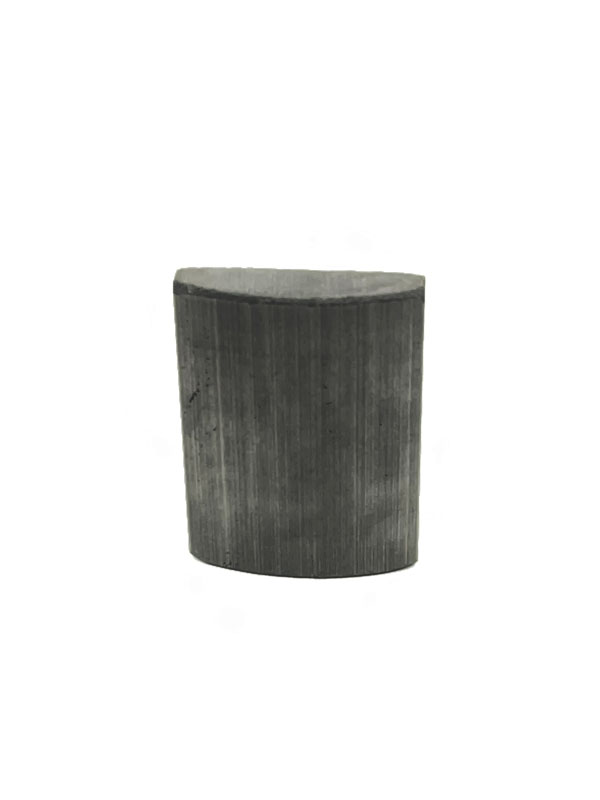
The physical shape of the magnet is just as important as its chemical composition in motor design. Block or cylinder magnets are common in other industries. Appliance motors almost exclusively use the Ferrite Arc shape. An arc magnet is shaped like a curved tile. It features a specific inner and outer radius. The rotor and stator of a washing machine motor are perfectly circular. The arc shape allows the magnet to sit flush against the curvature of the steel housing. Placing flat block magnets on a round surface creates uneven gaps. Precise geometric matching is a critical engineering requirement.
The primary goal of utilizing this curved geometry is to minimize the air gap. The air gap is the physical space between the permanent magnets on the rotor and the electromagnetic coils on the stator. Magnetic flux degrades rapidly as it travels through the air. Engineers use a precisely machined curved magnet that closely hugs the stator coils. This allows them to maintain an incredibly tight and uniform air gap. This tight clearance ensures that the maximum amount of magnetic energy transfers into rotational torque. It drastically improves the overall energy efficiency rating of the appliance.
Procurement managers and engineers must look at objective magnetic properties to understand why a specific ceramic magnet is chosen. Three key metrics dictate performance. Remanence indicates the residual magnetic strength of the material after it has been fully magnetized. It determines the baseline torque the motor can produce. Coercivity is the material resistance to demagnetization. High coercivity is vital for motors dealing with heavy shifting electrical loads. Maximum Energy Product represents the overall magnetic energy density.
Anisotropic grades are strictly required for high-torque appliance motors. Manufacturers press anisotropic magnets within a magnetic field during production. This aligns their internal crystalline structure to maximize magnetic strength in one specific direction. Based on premium industry standards, grades like Y30H-1 and Y33 are specifically optimized for these applications.
For example, a high-grade Y30H-1 Motor Magnet typically delivers a Remanence of 380 to 400 mT. Its intrinsic coercivity sits robustly above 230 kA/m. If a specific motor design requires a slightly higher flux density to overcome a larger air gap, engineers often upgrade to a Y33 grade. The Y33 pushes the Remanence up to 410 mT. These precise parameters provide the raw power and elevated resistance to demagnetization required for rigorous spin cycles.
The performance of a washing machine is only as reliable as the components inside it. Sourcing the right materials is a critical supply chain decision for appliance manufacturers. Buyers must evaluate suppliers based on strict quality control standards. ISO 9001 and IATF 16949 certifications guarantee consistent manufacturing processes. Dimensional precision is absolutely non-negotiable. Even a millimeter of deviation in an arc radius can cause mechanical rubbing inside the motor or widen the air gap. This leads to catastrophic efficiency losses. The supplier must demonstrate advanced machining and grinding capabilities.
No two washing machine motors are exactly alike. Top-tier magnet suppliers do not just offer standard off-the-shelf solutions. They provide extensive customization to meet proprietary engineering designs. This includes customizing the inner and outer radius of the arc, the precise cord length, and the overall thickness. Suppliers can customize the magnetization direction to be radial, diametrical, or multi-pole. This perfectly syncs with the specific electromagnetic coil configuration of the stator and ensures maximum operational efficiency.
The modern washing machine is a marvel of consumer engineering. Users expect it to run quietly, efficiently, and flawlessly for over a decade. The unsung hero making this possible is strontium ferrite. It provides the perfect triad of cost-efficiency, superior thermal stability, and rugged durability against corrosion and demagnetization. It has firmly cemented its place as the ideal washing machine motor magnet.
Global energy standards continue to become stricter. Consumers demand quieter and more reliable home appliances. The reliance on high-quality and precision-engineered ferrite magnets will only continue to grow. Manufacturers who prioritize sourcing premium anisotropic materials will ensure their appliances remain highly competitive in both performance and price.
Consulting with a specialized magnet supplier is the crucial next step for appliance manufacturers, motor design engineers, and purchasing managers looking to optimize their next Direct Drive motor project. Explore high-performance solutions and request custom prototypes by visiting Strontium Ferrite products at Anhui GC Magnet. Their expert engineering team can provide detailed magnetic property charts and comprehensive quotes tailored precisely to your manufacturing requirements.
These magnets typically outlast the mechanical lifespan of the washing machine itself due to their exceptionally high resistance to demagnetization and natural immunity to corrosion. In most cases, they perform reliably for decades without any noticeable degradation in magnetic strength.
All magnetic materials can technically degrade under extreme and unnatural conditions. However, strontium ferrite features excellent high-temperature stability and high intrinsic coercivity. It will not lose its magnetism under normal or even extremely heavy washing machine operations.
The arc shape is specifically manufactured to conform to the circular design of the motor rotor or stator. This precise geometry minimizes the air gap between the rotating and stationary components. A tighter air gap significantly increases the electrical efficiency and torque output of the motor compared to flat block magnets.
For washing machines, they are absolutely better. Neodymium is inherently stronger but strontium ferrite is much more cost-effective. Ferrite handles high operating temperatures much better without losing strength and does not rust in humid laundry room environments. This makes it the superior and long-lasting choice for large home appliances.
Standard washing machine motors generate significant heat during extended spin cycles. High-quality anisotropic ferrite magnets are engineered to maintain stable magnetic flux at continuous operating temperatures up to 250 degrees Celsius. This ensures the motor does not stall or lose efficiency during back-to-back laundry loads.
The magnet grade directly dictates the baseline torque and demagnetization resistance. Higher grades like Y30H-1 or Y33 provide greater remanence and intrinsic coercivity. Selecting the correct grade allows engineers to maximize motor efficiency while keeping the overall physical size of the motor housing as compact as possible.
