
English 
Views: 0 Author: Site Editor Publish Time: 2026-10-05 Origin: Site


The global market for household and commercial cleaning appliances is expanding at an unprecedented rate. This growth is heavily fueled by the rise of automated smart homes and advanced mechanical engineering. At the core of this technological leap is an often-overlooked component. That component is the electric motor, and more specifically, the permanent magnets driving its rotation. Floor cleaning motors operate in exceptionally demanding environments. They face extreme heat, constant moisture, and sudden mechanical jams. Finding a reliable, durable, and cost-effective magnetic material to survive these grueling conditions presents a significant engineering challenge.
For decades, Strontium Ferrite has consistently proven to be the premier magnetic material for these specific heavy-duty applications. Its unique chemical properties, inherent thermal stability, and overall cost-effectiveness make it the optimal engineering choice. In this comprehensive technical guide, we will break down the material science, mechanical engineering principles, and economic benefits of utilizing this robust ceramic compound in modern floor care technology.
Unmatched Cost-to-Performance Ratio: This ceramic material provides the optimal balance of magnetic strength and affordability. This equilibrium makes it the absolute standard for mass-produced consumer cleaning appliances where budget constraints remain strict.
High Coercivity: Its robust resistance to demagnetization guarantees reliable performance. Even when the motor experiences sudden electrical load spikes from a jammed brush, the magnet retains its full operational integrity.
Corrosion and Heat Resistance: As a natural oxide, it is inherently immune to rust. Coupled with its ability to operate efficiently at high temperatures, it thrives in the damp, warm environments typical of floor scrubbers.
Versatile Design: The raw powder materials are easily manufactured into specific curved geometries. These shapes perfectly match the stator design required for highly efficient direct current motors.
Broad Applications: The inherent durability extends well beyond floor care. It serves as an excellent foundational component for automotive alternators and industrial power generation systems.
Looking at current industry trends, the global market for automated cleaning devices is expanding exponentially. Supply chain volatility and unpredictable rare-earth metal pricing have put immense pressure on appliance manufacturers. Consequently, securing a reliable motor architecture utilizing stable, low-cost domestic materials has become a top strategic priority.
While premium ultra-lightweight stick vacuums sometimes lean on rare-earth elements for extreme miniaturization, the broader industry consensus heavily favors traditional ceramics for mass-market scaling. Engineers are actively shifting away from cost-prohibitive materials. They are redesigning stators to maximize the efficiency of hard ferrites. This shift not only stabilizes production costs but also ensures consistent product availability without sacrificing the cleaning power consumers expect.
To truly appreciate why specific materials are chosen for appliance engineering, one must first understand the grueling operational environment. A dedicated mechanism is required to drive the rotating bristle brushes found in vacuum cleaners, robotic sweepers, and industrial floor scrubbers. Its primary function is to agitate dirt, dust, and embedded debris. It lifts them from various surfaces so the primary suction turbine can extract them.
However, the internal environment for these components is remarkably harsh and dynamic. Consider the sheer thermal stress generated when a commercial scrubber runs uninterrupted for a three-hour shift in a shopping mall. Because the motor is enclosed within a dense plastic housing to reduce noise and protect the user, heat dissipation is severely limited. Internal temperatures rise rapidly. This puts immense thermal strain on all adjacent electrical components.
Beyond these thermal challenges, the motor faces severe physical load variations. Imagine a robotic vacuum transitioning from a smooth hardwood floor to a thick, high-pile carpet. The mechanical friction against the brush roller increases exponentially in a fraction of a second. This sudden resistance causes immediate torque demands and massive electrical load spikes. Furthermore, moisture and dust are constant threats. Wet and dry vacuums actively utilize water and harsh chemical detergents. Therefore, the permanent magnet chosen for the stator must withstand elevated temperatures, resist demagnetizing electrical surges, and survive in damp conditions without degrading over time.
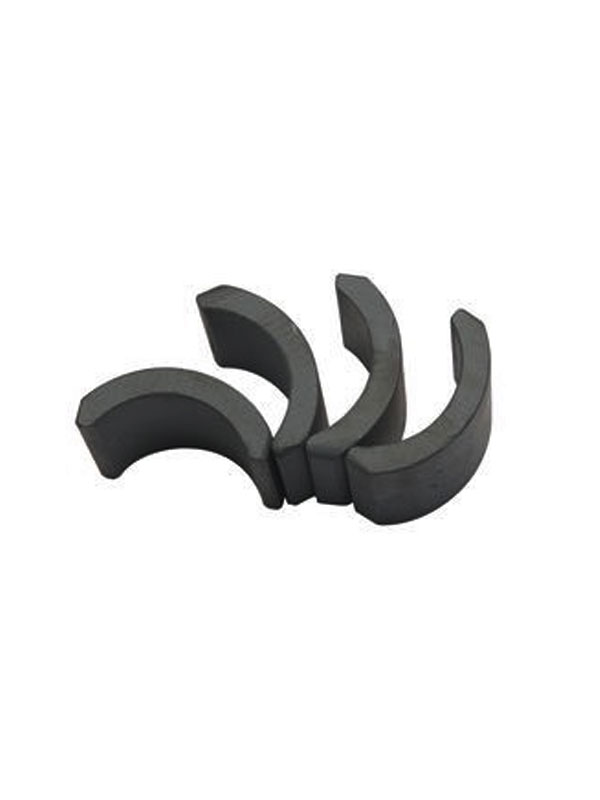
Engineers have evaluated numerous magnetic materials for household appliances. Yet, this specific ceramic consistently emerges as the superior choice. Here are the primary engineering and economic reasons behind this solid industry consensus.
Coercivity is a fundamental scientific metric defining a material's ability to withstand an external magnetic field without becoming demagnetized. When a Floor Brush Motor Magnet encounters a sudden mechanical jam, such as a thick sock caught in the roller, the rotor stops spinning. However, the electrical current continues to flow from the battery or wall outlet. This stall condition creates a massive surge of reverse electrical current. It generates a strong opposing magnetic field within the housing. Materials with low coercivity would permanently lose a fraction of their strength during such an event. Strontium ferrite possesses exceptionally high intrinsic coercivity. It easily maintains its magnetic alignment and ensures the motor operates at full power the moment the jam is cleared.
Many high-strength metallic alternatives contain large amounts of iron. These are highly susceptible to rapid oxidation. To prevent rust, they strictly require expensive protective surface coatings like nickel, zinc, or epoxy. If this coating chips under high vibration, the component degrades rapidly. In stark contrast, strontium ferrite, chemically known as SrFe12O19, is already an oxide. Because it is fully oxidized during the high-temperature manufacturing process, it is virtually immune to further corrosion. This built-in rust resistance is a massive advantage for appliances that constantly operate in the presence of water, steam, and abrasive detergents.
Heat is the natural enemy of permanent magnets. As temperatures rise, magnetic flux density typically decreases. Strontium ferrite demonstrates superior thermal stability compared to many alternative materials. It boasts a high Curie temperature of approximately 450 degrees Celsius. It can comfortably operate continuously in internal environments reaching up to 250 degrees Celsius. When a floor cleaning appliance runs for an extended period and internal temperatures soar, this thermal resilience prevents performance degradation. It ensures the vacuum cleans just as effectively at the end of a long chore as it did at the beginning.
The consumer appliance market operates on notoriously strict profit margins. Manufacturers must tightly control production costs to maintain favorable retail pricing. The primary raw materials required to produce this ceramic are iron oxide and strontium carbonate. Both are highly abundant and globally accessible. The stable supply chain and low processing costs allow manufacturers to produce powerful, reliable motors without inflating the final retail price of consumer goods.
When designing a new appliance, engineers typically weigh the operational benefits of hard ferrite ceramics against rare-earth options like Neodymium iron boron. Understanding when to use each material is key to successful product development.
Neodymium is undeniably stronger by volume and weight. It is the preferred choice when extreme miniaturization is the primary engineering goal. You see this in ultra-compact cordless stick vacuums where every gram matters. However, for standard upright vacuums, heavy-duty robotic sweepers, and commercial scrubbers, extreme miniaturization is not necessary. In these applications, the motor weight is a negligible factor compared to the overall weight of the machine.
To clearly illustrate the engineering trade-offs, consider the following performance comparison for a standard Brush Motor application:
Performance Metric | Strontium Ferrite | Neodymium |
|---|---|---|
Cost per Kilogram | Extremely Low and Stable | High and Volatile |
Maximum Operating Temp | Up to 250°C | Typically 80°C to 150°C |
Corrosion Resistance | Excellent inherently immune to rust | Poor requires protective plating |
Magnetic Strength by Volume | Moderate | Extremely High |
Strontium ferrite wins the mass-market battle. It does not corrode in wet environments, withstands higher continuous operating temperatures, and costs a fraction of the price. This provides a vastly superior return on investment for high-volume appliance manufacturers.
The specific physical geometry of the magnetic component is just as important as its underlying chemical composition. Optimizing the air gap is a fundamental, non-negotiable principle in electric motor design. Magnetic strength decreases exponentially as the physical distance between components increases.
Therefore, the precise curvature of a Ferrite Arc Magnet is engineered to minimize the space between the stationary stator and the spinning armature. By contouring perfectly to the rotor radius, the arc maximizes the magnetic flux density interacting with the copper coils. This directly translates to higher torque generation and much better electrical efficiency.
Furthermore, high-performance floor brush motors almost exclusively utilize anisotropic arcs. During the pressing stage of manufacturing, an external magnetic field aligns the powder particles in a single, optimal direction. This significantly boosts the magnetic strength of the final product compared to unaligned variants. Mechanically, the resulting ceramic is rigid and structurally sound. These arcs are typically secured into the steel motor housing using industrial adhesives or mechanical metal clips. This ensures they do not warp or shift under intense vibrational stress.
The exceptional properties making this material the standard for floor cleaning appliances translate seamlessly to other heavy-duty industries. The fundamental physics of an electric motor converting electrical energy into mechanical motion are identical to those of a generator converting mechanical motion into electrical energy.
Because of its thermal stability, low procurement cost, and high coercivity, strontium ferrite is frequently utilized as a highly reliable Generator Magnet in various industrial applications. It is commonly found in the alternators of automobiles, portable off-grid power generators, and smaller wind turbine systems. Engineers across all sectors seek materials providing predictable magnetic flux under thermal stress. They need components that resist environmental degradation from humidity and salt air while keeping manufacturing budgets firmly under control.
For procurement managers and mechanical engineers looking to source components for a new motor design, selecting the right supplier and specifying the correct technical parameters is crucial. Abstract concepts must be translated into strict purchasing standards.
First, choosing the precise material grade is essential. For high-stress floor brush motors, engineers should look past standard grades and specify high-coercivity variants like Y30BH. A proper Y30BH specification guarantees a Remanence Br between 380 and 400 milliteslas, paired with an Intrinsic Coercivity Hcj exceeding 230 kiloamperes per meter. This specific balance ensures the motor delivers high starting torque while surviving severe stall currents without demagnetizing.
Secondly, dimensional tolerances must be strictly controlled on the engineering drawing. Precise machining of the arc inner and outer radius is critical. If the inner radius is too small, the component will cause friction and rub against the spinning rotor. This leads to catastrophic mechanical failure. If it is too large, the air gap increases, and motor efficiency plummets.
Finally, sourcing should focus on manufacturers with stringent quality control systems. Decision-makers must actively look for suppliers providing consistent B-H curve testing reports with every shipment. This verifies that every single batch meets the specified magnetic flux requirements before assembly begins.
Strontium ferrite remains the undisputed backbone of reliable, cost-effective floor brush motors. Its unique combination of high coercivity, superior thermal stability, and natural corrosion resistance allows it to thrive. It performs flawlessly in the demanding, heat-intensive, and often damp environments of household and commercial cleaning appliances.
While motor technology continues to evolve with advanced electronics, the fundamental physics and economics of traditional ceramic arcs are virtually irreplaceable for mass-market applications. They ensure manufacturers can deliver powerful, durable, and affordable appliances to consumers worldwide. If you are an engineer or procurement manager developing the next generation of cleaning appliances or power generators, securing the right magnetic components is your first step to success. We highly encourage you to explore the specialized, high-performance product lineups at Anhui GC Magnet to find the exact material grade and custom geometry tailored to your specific motor project.
Strontium ferrite generally offers a significantly higher coercive force. This means it possesses a stronger natural resistance to demagnetization. It also provides better overall magnetic performance metrics compared to barium ferrite. While both are ceramic compounds, this superior operational stability makes strontium the preferred and more modern choice for demanding electric motor applications.
For high-performance vacuum and floor brush motors, engineers typically specify anisotropic grades like Y30 or Y30BH. Grade Y30BH is particularly favored because it offers an excellent balance of high remanence for strong torque and elevated intrinsic coercivity. This prevents the magnet from losing strength when the motor experiences sudden jams or electrical spikes.
Yes, brushless direct current motors are becoming increasingly popular. They are especially common in high-end, battery-powered appliances due to their electrical efficiency and longevity. However, traditional brushed motors utilizing ceramic magnets remain the most cost-effective, easily controlled, and widely standardized solution for plug-in floor care appliances where retail budget constraints are a primary concern.
Absolutely. Ferrite magnets are chemically classified as ceramic oxides. Because they are already fully oxidized during manufacturing, they will not rust when exposed to moisture, water, or cleaning chemicals. Rare earth magnets like Neodymium contain high amounts of iron and will rapidly corrode and disintegrate in wet environments unless protected by expensive and vulnerable surface platings.
They are explicitly shaped as arcs to perfectly contour around the cylindrical rotor assembly. This specific curved geometry minimizes the physical air gap between the stationary stator and the spinning copper coils. A tighter air gap ensures the motor operates at maximum electrical efficiency and generates optimal mechanical torque.
Permanent magnets of this type degrade at an exceptionally slow rate. They often experience less than a one percent loss in total magnetic strength over a ten-year operational span under normal conditions. In almost all consumer and commercial scenarios, the motor carbon brushes, mechanical bearings, or plastic housing will wear out completely long before the magnet loses its functional strength.
